The operational problem
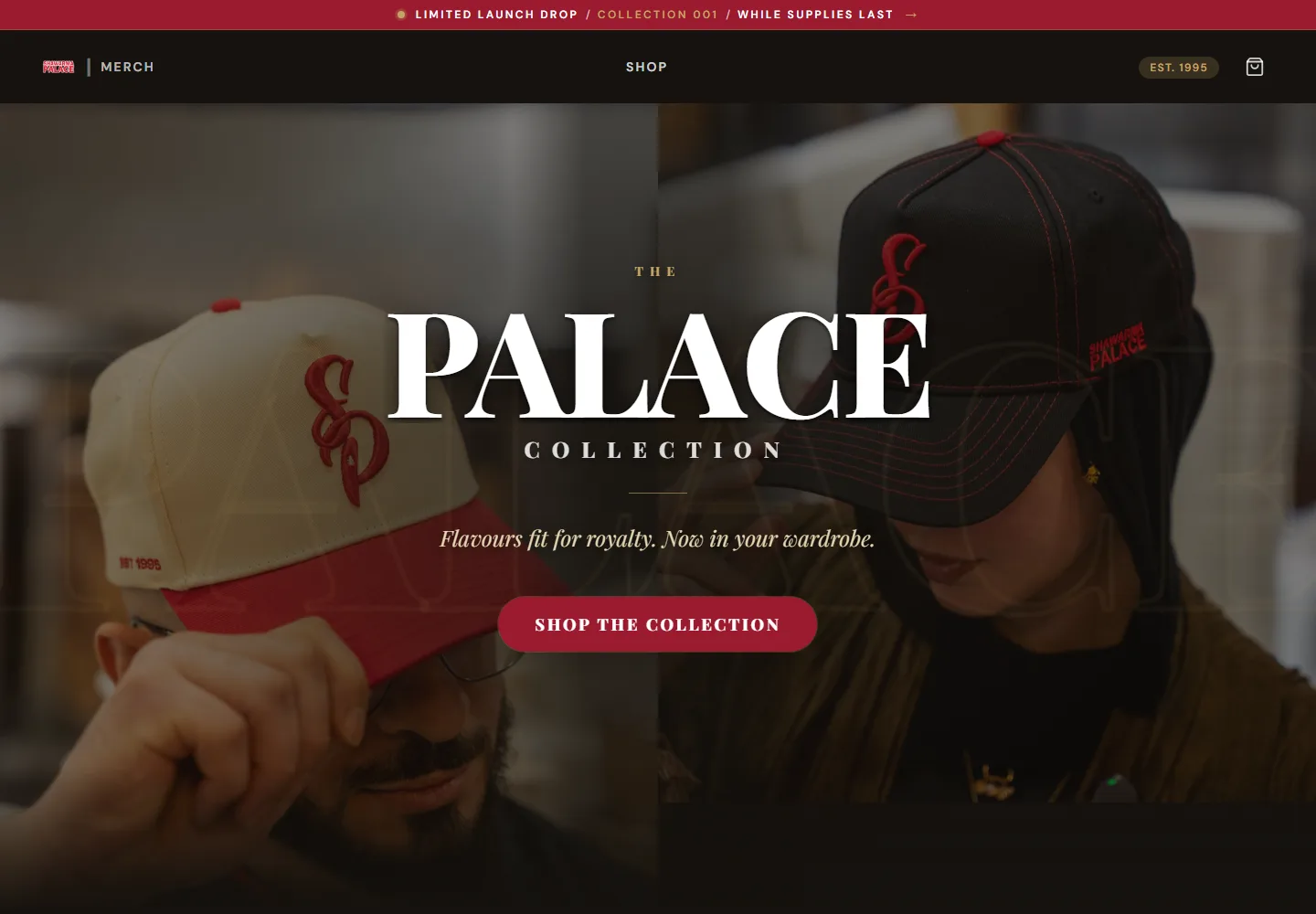
The client wanted a distinctive merchandise experience while keeping Shopify as the product and checkout engine.
Shipped a custom React storefront connected to Shopify products, cart, and hosted checkout.
Why this system exists
A custom front end protects the brand experience while Shopify remains the source of truth for product, inventory, payment, tax, shipping, and confirmation.
This is a merchandise storefront, not the restaurant's food-ordering platform.
How the work moves
- Browse collection
- Open product
- Choose colourway
- Add to cart
- Create Shopify cart
- Continue to hosted checkout
What shaped the solution
Shopify remained the commerce source of truth.
Admin API and full US operations were not complete.
What I owned
Designed
Brand-led collection, product, and responsive commerce flow
Developed
React storefront, collection, product detail, cart, contact, and policies
Integrated
Shopify Storefront GraphQL and hosted checkout
Tested
Products, variants, cart creation, checkout handoff, and responsive layouts
Collaborated
Client launch, product, imagery, domain, and checkout decisions
Decisions that carried the work
Keep checkout native
The custom front end creates the cart, then hands payment to Shopify-hosted checkout instead of rebuilding sensitive commerce infrastructure.
Verified outcome
Live client subdomain.
Product variants and hosted checkout verified end to end.
What I will not overclaim
Storefront and checkout shipped. Admin OAuth, full US shipping, and occasional production environment parity remained open in the reviewed evidence.
Verified from the project brief and public storefront.